
The short version: Some fungi and lichens can survive the raw vacuum of space, and fungal spores can stay viable for hundreds of millions of years. That has led some thinkers to a wild idea called panspermia: that life did not begin on Earth at all, but arrived from space, possibly as fungi. Here is my favourite far-out take on it, where the science is solid, where I am openly speculating, and why I think the fungi might still be steering us toward the stars.
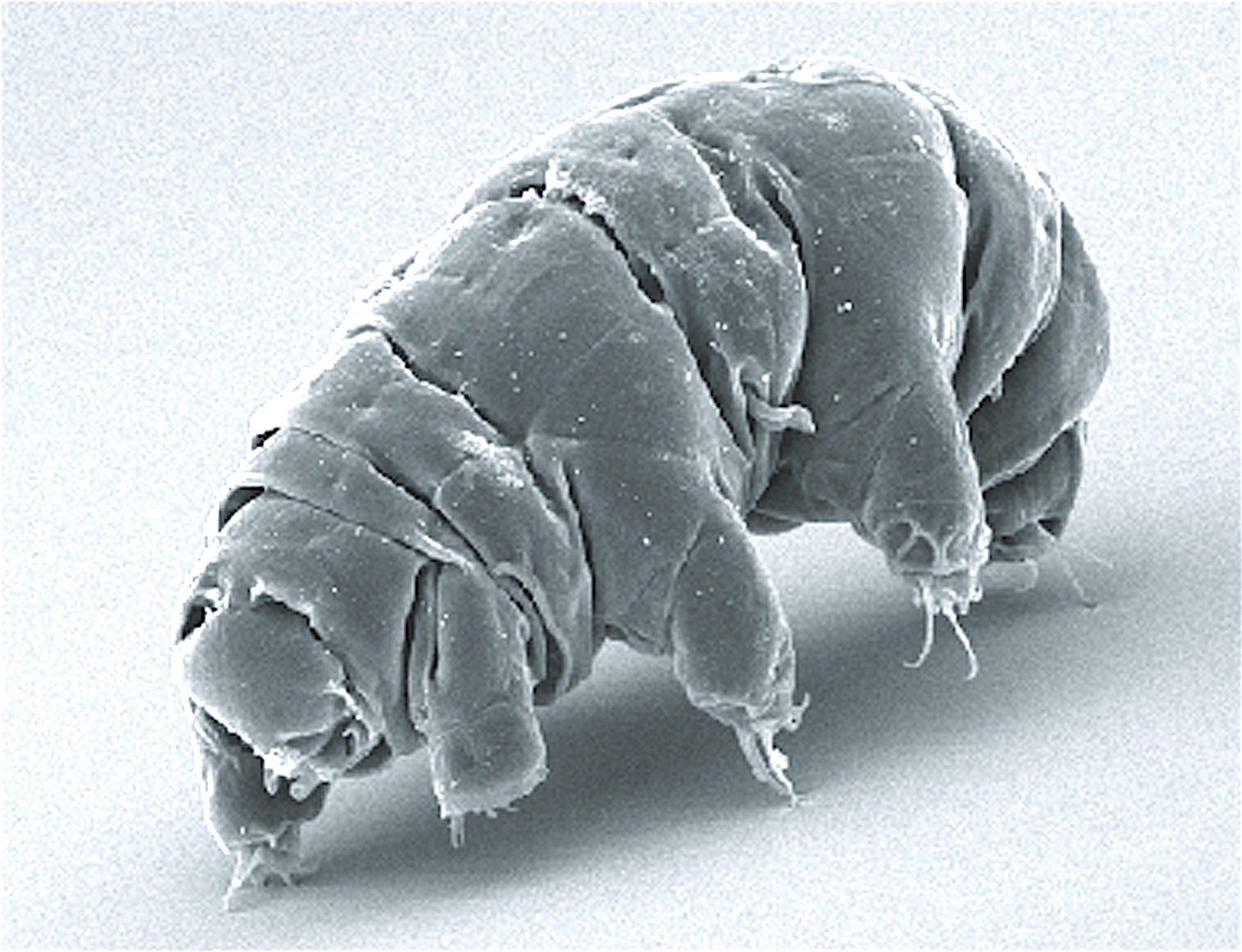
Let us start in space. Space is really hard to survive. It can be scorching or freezing, and ultraviolet and cosmic radiation are everywhere. Radiation is basically the only thing present in the vacuum of space. Yet some organisms can survive it. The microscopic animal known as the tardigrade can survive a journey into space for 11 days and still be alive and kicking after landing back on Earth. Just so we are clear, humans cannot do that.
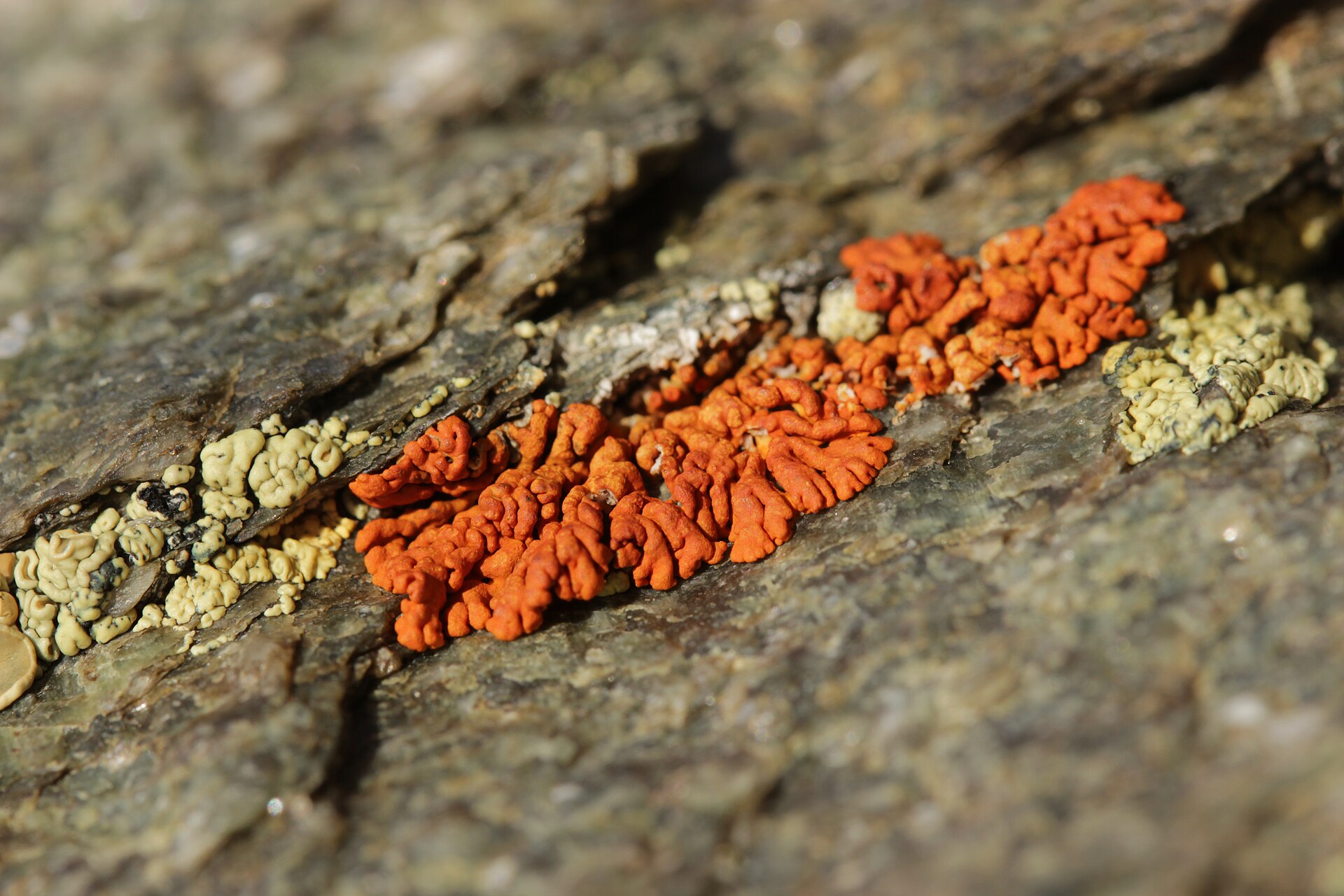
But tardigrades are nothing compared to some of the organisms that LIFE has exposed to these extreme conditions. LIFE is the Lichens and Fungi Experiment on the International Space Station, and a lot of what they do is put things in space to see how long they can hang on. Lichens are complex, symbiotic organisms made up of a fungus and an alga or cyanobacteria. The fungus makes up most of the body, while the alga or cyanobacteria feeds the whole organism through photosynthesis. This collaboration is so successful that it is thought to have evolved independently more than five times over the eons.
One of the toughest lichens out there is Xanthoria elegans. More than 71% of specimens survived over 1.5 years bare naked in space. On top of that, this lichen can survive a pressure of at least 50 gigapascal, which means it could survive the first and second phases of the interplanetary transfer process.
What is panspermia?
Why does this matter? Because this kind of evidence hints that life might not have originated on Earth at all. Our planet might just be the substrate, inoculated by the fungi. This concept is called panspermia. It has many flavours. Sometimes I like to fantasize that fungi and their spores are a biotechnology engineered by an ancient alien civilization wanting to spread life all over the universe, a great machine producing countless spores that wander in search of a substrate to inoculate.
A somewhat more plausible idea is lithopanspermia. It proposes that extremophile life could survive being blasted into space when its home planet is slammed by an asteroid and part of the crust is flung out. The fungus and its spores then find themselves flying through space on the most low-tech of spaceships, a simple rock. That asteroid could strike another planet in its own solar system, or, given enough velocity, escape its sun entirely and roam the galaxy until one day, BAM, it hits a young planet ready for life to flourish.
Now, I doubt even the hardy Xanthoria elegans would survive such a long trip. But its spores just might.
Spores: nature’s indestructible time capsules
Fungal spores are the nearly indestructible cousins of plant seeds. Microscopic little safes full of DNA that can survive space so easily that the International Space Station actually has a mold problem. Marta Cortesão, a microbiologist at the German Aerospace Center, tried to fix it by blasting Aspergillus mold with, and I am quoting here, “stupid amounts of radiation.” Up to 1,000 gray, around 200 times more than a human could survive. The mold shrugged it off.
But surviving radiation is not enough to be an interstellar traveller. You also need to not die for a very long time. Fungi have that covered too. The oldest viable spores ever found on Earth are around 250 million years old.
Were fungi the first life on Earth?
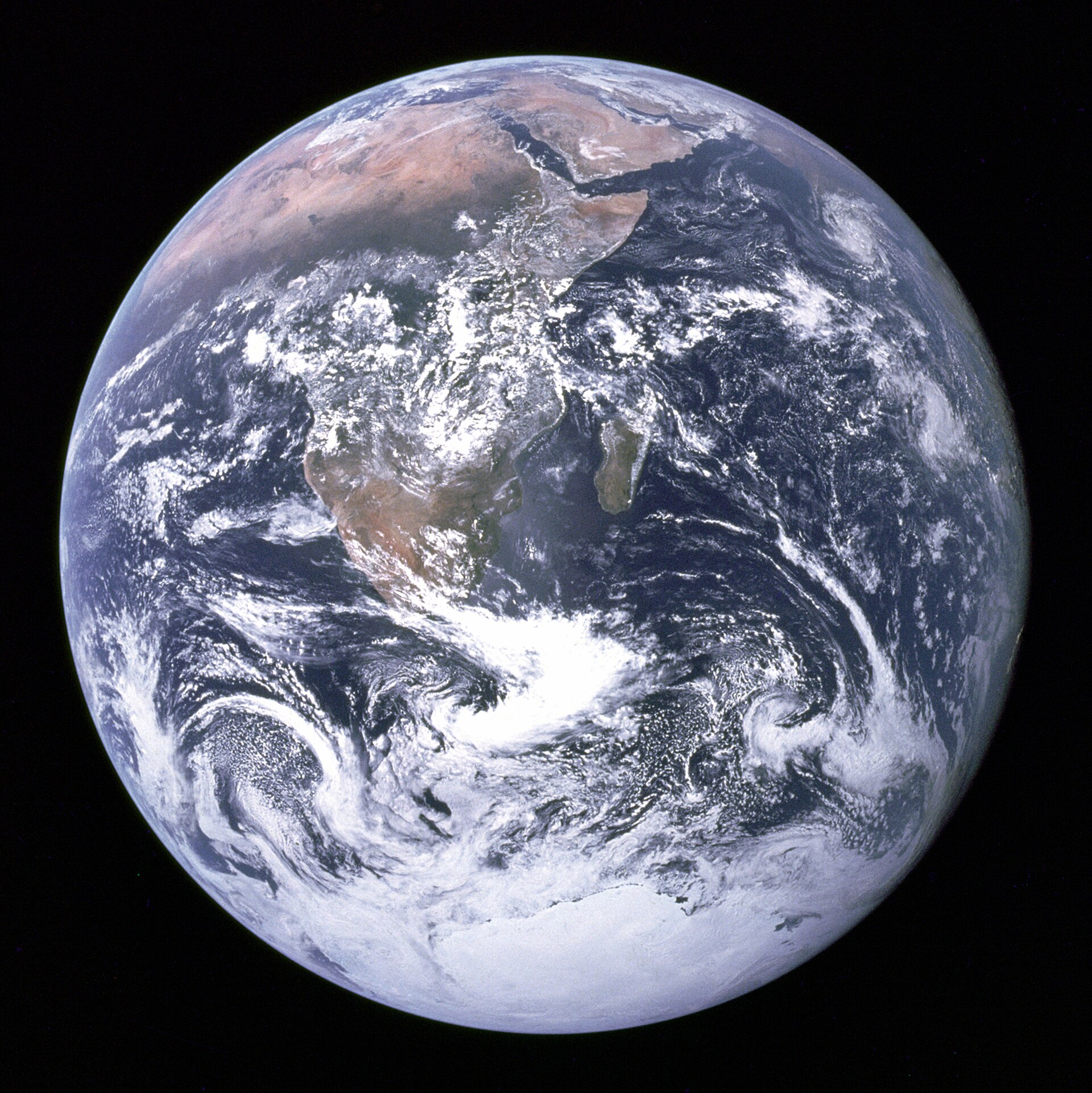
Let us imagine that BAM was Earth, in a very young stage, when our pale blue dot was nothing but water and rock. That the very first organism here was in fact an alien fungus from another solar system. Or maybe even an alien lichen.
Give it enough time, a couple of billion years, and evolution does its thing. Life grows more complex, species come and go, algae take over the waters, the first primitive animals appear, the first fungi crawl onto land. Right now we believe life originated about 3.4 billion years ago, and we have solid evidence that mycelium has been around for 2.4 billion years.
The first evidence of lichens is around 600 million years old, and the first animals around 540 million. Yet some researchers think an organism called Dickinsonia might be more closely related to fungi than to animals. If you are open to it, that creature could be a missing link between fungi and animals. From 470 to 360 million years ago, giant fungal towers called Prototaxites, standing up to 8 metres tall, ruled the Earth, likely feeding and housing the first insects to leave the ocean and helping turn barren rock into soil.
Here is the real kicker. The first plants with roots, peat mosses, appear about 410 million years ago, but the ancestors of mycorrhizal fungi date back 460 million years. Mycorrhizal fungi connect with plant roots in one of nature’s most beautiful symbioses, and we have evidence of them 50 million years before plants with roots. That is why some people say fungi were the roots of plants before plants evolved their own. Fungi seem to push the whole organic evolution of our planet forward by supporting other organisms.
Mushrooms on Mars?
If fungi can survive space and even thrive in radiation, the obvious question becomes: could they live on other planets? A few years ago, a paper made the rounds claiming that sequential photos from Mars showed fungus-like specimens, even something resembling puffballs, emerging from the soil and growing. It was, to put it mildly, controversial, and most scientists pushed back hard on the claims.
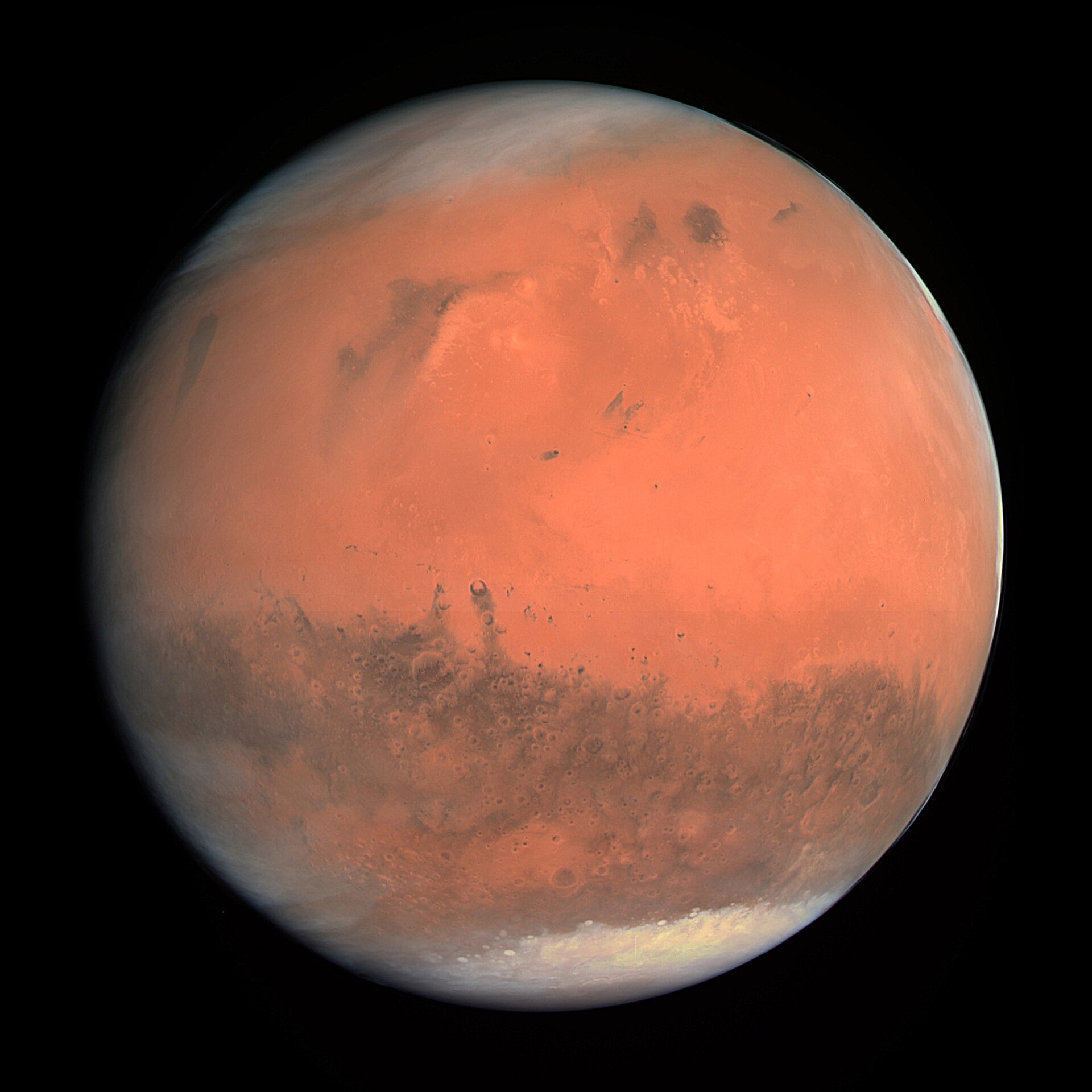
I want to be clear that this is fringe science, not a settled finding, and I would not bet the farm on Martian mushrooms. But it is a fun thought to sit with. We really like to believe we are special and alone. If life turned up on Mars, the odds of life elsewhere in the universe would suddenly skyrocket. Whether or not there are puffballs on the red planet, the deeper point stands: fungi are exactly the kind of tough, spore-slinging organism you would expect to find spreading between worlds.
Fungi, the stoned ape, and the urge to look up
Here is where it gets even more interesting. Recent papers suggest the whole genus Psilocybe originated in Africa roughly 10 to 20 million years ago, around the same time our ancestors started diverging from the other primates. Coincidence? I am not so sure. I like to imagine the fungi sensed the potential in our ancestors and evolved a group of mushrooms whose compounds could expand their minds.
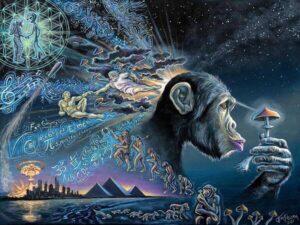
Psilocybe mushrooms tend to grow in disturbed ground. Grazing animals lived close to our ancestors, and everyone knows what grows from their dung. Liberty caps grow in open meadows, lawns, and pastures. Wavy caps and other wood-loving species grow on woodchips in mulched beds. It is almost as if these fungi are calling out, “Eat us, we know you are here.” If you have read my take on the Stoned Ape Theory or my deep dive into the science of psilocybin, you know I think mushrooms had a hand in waking up the human mind. So who says they ever stopped? Maybe we are not so different from the carpenter ant steered by Ophiocordyceps unilateralis, our minds gently nudged toward a much bigger goal: getting to space.
Psychedelics and the drive to the stars
To see the thread, we have to talk about beer. We have been brewing since the dawn of agriculture, and the “beer before bread” hypothesis even argues the agricultural revolution happened because of beer, with bread as a happy accident. But the beer our ancestors brewed was nothing like today’s. Before the Reinheitsgebot, the German purity law of 1516, beers and wines were alchemical cocktails of herbs, spices, and fungi, often highly psychoactive. Greek accounts describe wines so potent they had to be diluted with twelve parts water, long before distillation existed.
Thanks to Brian Muraresku’s The Immortality Key, we now have evidence that ergot, the fungus Albert Hofmann later synthesized LSD from, was used in the brews of the Eleusinian mysteries. The philosophers of the Greek golden age attended these rites. Some looked at the state and society. Others looked at the stars. The Pythagorean philosopher Philolaus reasoned that the sun was larger than the Earth, and that the Earth moved around it, an early flash of heliocentrism.
Heliocentrism did not truly take off again until Nicolaus Copernicus, who began his work in 1514, just two years before the Reinheitsgebot. He did not publish until the year of his death in 1543, because he understood the consequences. It is pure speculation, but I cannot help wondering whether the great astronomers of the Renaissance carried on the legacy of those psychoactive brews.
What followed in our own era is not so far off. After the Second World War, LSD, a compound made from a fungus, spread through psychiatry, science fiction, and science itself. It has been claimed that Francis Crick was under the influence of LSD when he first pictured the double helix, and Richard Feynman, the Nobel-winning physicist, wrote openly about experimenting with LSD and other substances. The space race, our biggest leap into the vastness of the universe, roughly ran from 1955 to 1975. The war on drugs officially began in 1971. It seems that once the fungal entheogens were taken away at scale, we somehow lost our appetite for space.
But the times are changing. LSD use among US adults rose sharply in the late 2010s, and our interest in space climbed right alongside it. SpaceX is launching hundreds of flights, carrying who knows how many fungal spores along for the ride, and even Elon Musk has said he is open to psychedelics. The psychedelic renaissance is in full swing, with states decriminalizing and even legalizing these natural compounds.
Are we being used?
So let us recap. Fungi can survive the vacuum of space, possibly for eons. They have the tools to terraform a barren planet into a thriving one that could one day evolve a curious ape. They may have created a compound that helped that ape grow its brain, its consciousness, and its technology, and with it the deep urge to look up and wonder what is out there. Amplify that curiosity enough, and before you know it the ape is shooting rockets into space, rockets covered in fungal spores, ready to seed the rest of the galaxy.
Are we sure we are not being used, like the zombie ant whose brain is steered by a fungus so it can spread its spores? I am not sure. But honestly, I say let the fungi inoculate our minds. Let them use us to reach space and spread through the universe. We will learn so much about ourselves along the way, and after everything they have done for us, it feels like the least we can do for them.
Get closer to the fungi
Learn to grow mushrooms from scratch
Our Online Mushroom Cultivation Course takes you all the way from spore to harvest, no lab required. Join thousands of growers around the world.
Frequently asked questions
What is panspermia?
Panspermia is the hypothesis that life did not originate on Earth but arrived from elsewhere in the universe, carried through space by tough organisms or their spores.
Can fungi really survive in space?
Some can survive extreme conditions remarkably well. Lichens like Xanthoria elegans have survived more than a year exposed in space, and fungal spores can shrug off radiation doses that would kill a human many times over.
Are mushrooms actually from outer space?
There is no proof of that. It is a speculative idea inspired by how tough fungi are. What we do know is that fungi are ancient, resilient, and central to life on Earth.
How old are fungi?
We have evidence of mycelium going back about 2.4 billion years, and of mycorrhizal fungi around 460 million years ago, roughly 50 million years before plants with roots appear in the record.
Keep exploring
If your mind is buzzing, carry on with my take on the Stoned Ape Theory, the science of psilocybin, a pick of five psychedelic books worth reading, and a reflection on how magic mushrooms and nature heal both us and the planet.
This article is a speculative thought experiment for educational and entertainment purposes, blending established science with my own wild ideas. It is not scientific consensus, nor medical or legal advice. Psilocybin mushrooms are controlled substances in many countries.
Image credits via Wikimedia Commons and NASA (public domain / Creative Commons): Earth from Apollo 17, tardigrade, Xanthoria elegans, Mars.





.jpg)
