The short version: Psilocybin is the molecule behind the magic mushroom experience. Once eaten, your body converts it into psilocin, which binds to serotonin 5-HT2A receptors in the brain and quiets the default mode network, the filter that builds our everyday sense of reality. Below I walk through where psilocybin came from, which mushrooms make it, why on earth they bother, and what the latest science is starting to reveal.
Psychedelic mushrooms have seen an incredible rise in popularity in the last few years. Microdosing, macrodosing, hero dosing. In the news we find promises that these mushrooms can cure depression, ease anxiety, and even make us more productive. But what is actually happening inside these mythical organisms?
I am Jasper Degenaars of Fungi Academy. I have been growing Psilocybe mushrooms for over 12 years, and since 2019 I have taught tens of thousands of mycophiles from all over the world about these extraordinary organisms. Let me take you on a tour.
Where psilocybin came from
It all started in a Sandoz lab in Switzerland, when Albert Hofmann, the same man responsible for the creation of LSD-25, was sent some interesting mushrooms from Mexico by a controversial amateur mycologist with ties to the CIA. More on him later. While studying the mushrooms, Hofmann isolated two molecules he believed were responsible for the psychoactive effect of these sacred mushrooms. He named them psilocybin and psilocin, after the genus of his specimens.
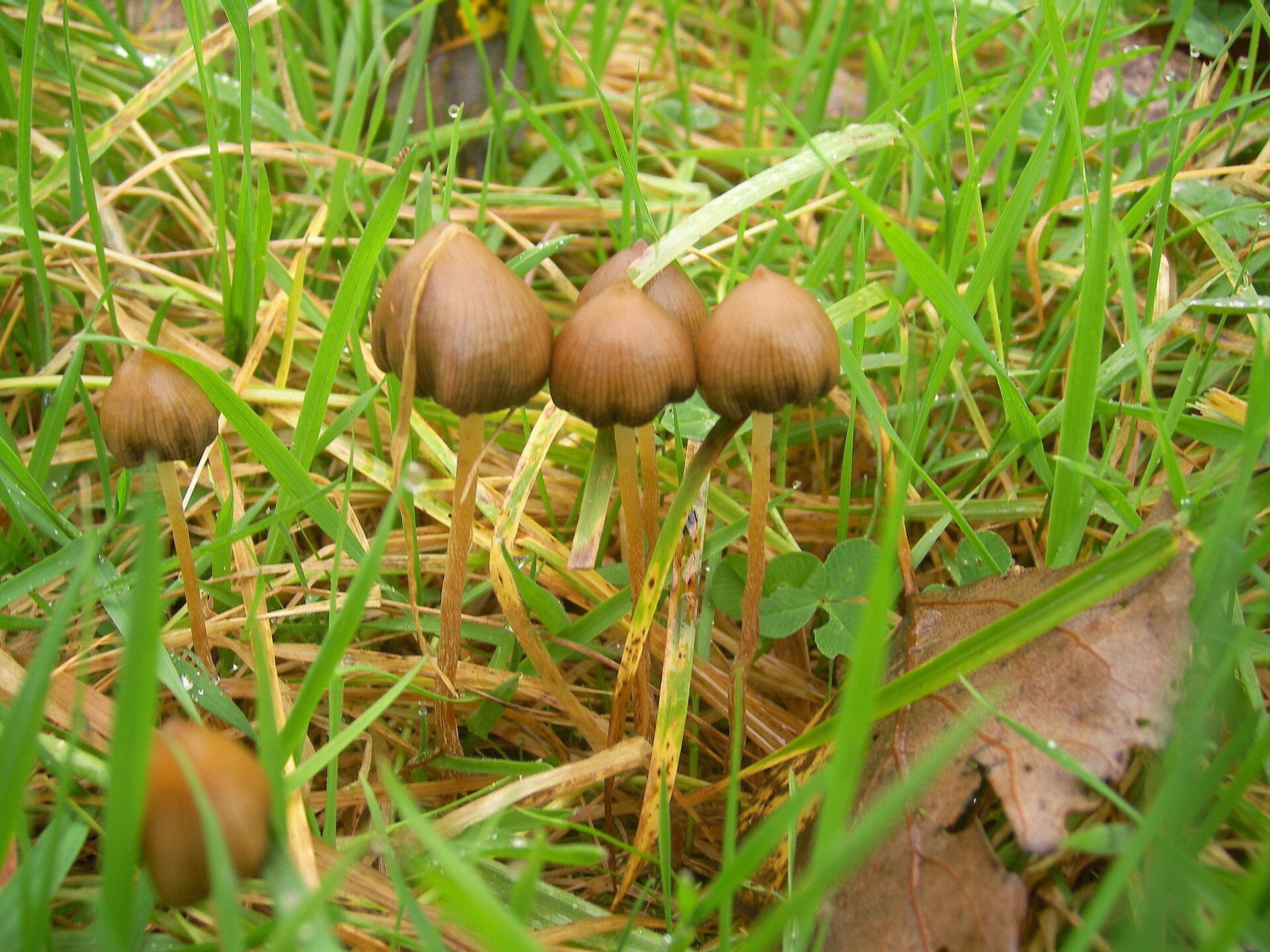
The genus is called Psilocybe, meaning the rather underwhelming “bare head.” Mushrooms in this genus grow all over the world, and most of them are capable of producing these wonderful molecules.

Maria Sabina and the mushrooms of Oaxaca
Hofmann’s specimens are now known as Psilocybe mexicana, also called teonanácatl, los niños santos, or pajaritos. These were the most sacred mushrooms to Maria Sabina and other Mazatec curanderas in the mountains of Oaxaca and the rest of the Mesoamerican highlands. Maria Sabina was a powerful medicine woman, a sabia, belonging to a line of indigenous wisdom keepers who kept the sacred use of psychedelic mushrooms alive despite hundreds of years of colonization and active efforts by the church to eradicate the practice.
In the 1950s she was visited by the American banker and CIA operative Gordon Wasson, who wrote an article in LIFE magazine called “Seeking the Magic Mushroom,” in which he published photos of Maria Sabina against her will. By sharing her culture with Wasson, she unknowingly helped start a massive migration of North Americans into her sacred lands that left the mountains of Oaxaca changed forever.
Psilocybe grows all over the world
As people started finding out, these mushrooms do not only grow in Mexico. We find mushrooms of the genus Psilocybe all over the world, from the jungles of Thailand to the rolling hills of Scotland to the temperate rainforests of the Pacific Northwest.
There are currently about 165 species of Psilocybe known to science. It is funny that you see memes flying around like “magic mushrooms grow from poop, so can you,” because in reality most psychoactive mushrooms do not grow from dung at all. Globally you have a much higher chance of finding them on woodchips, large grasslands, mossy forest floors, or pastures than you do on dung. Psilocybe cubensis and Psilocybe atlantis are the only mushrooms in the genus I am aware of that actually grow on dung, and most people have never even heard of the latter.
It is not only Psilocybe
Although the psilocybes are by far the most abundant magic mushrooms, through horizontal gene transfer the ability to produce psilocybin and the other active compounds has passed over to other genera.
Most notable are some mushrooms in the genus Panaeolus, which also grow on cow dung but are significantly smaller, sometimes called blue meanies. Laughing gyms are a dozen or so species in the genus Gymnopilus that have been found to contain psilocybin and psilocin. There are also mushrooms in the genera Pluteus, Conocybe, Inocybe, Pholiotina, and even a single mushroom in the genus Galerina that carries these psychedelic alkaloids. That last one is best avoided, since its close relatives in the deadly Galerina family are not called deadly for nothing.
Meet Psilocybe cubensis: a cube is a cube
Although there are over 200 species of psychedelic mushroom in the wild, if you have ever had a magic mushroom experience, it is very likely you have only ever had one species.
That species is Psilocybe cubensis, also known as the magic mushroom, shroom, cube, gold cap, golden teacher, San Isidro, or, as we call them in the Netherlands, the paddo. And let us not forget the hundreds, if not thousands, of strains that have emerged from cultivating this mushroom: B+, McKennaii, Penis Envy, Tidal Wave, Hillbilly, Enigma, and I could keep going. All of these varieties belong to a single species, Psilocybe cubensis.
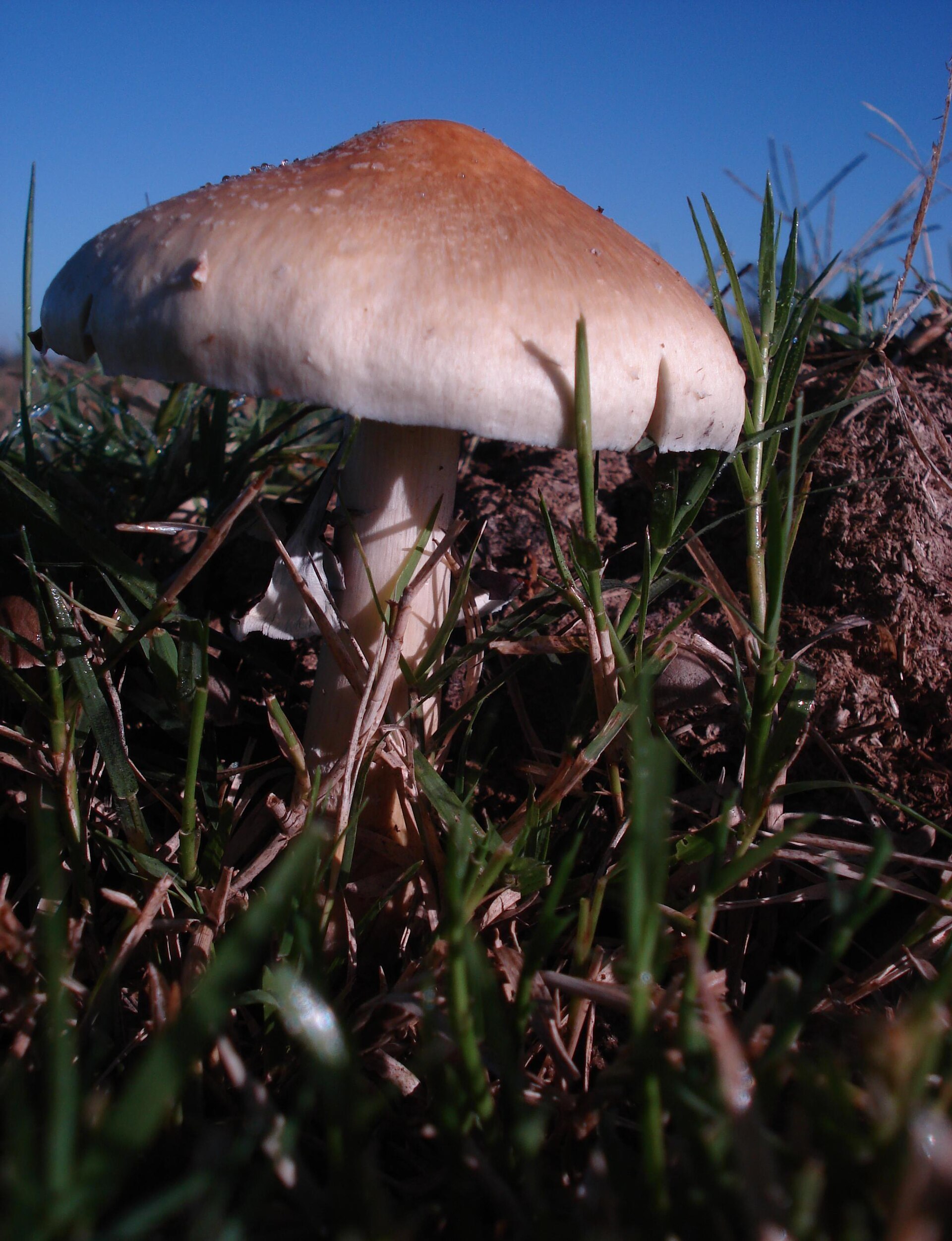
It was first described in 1906 in Cuba, but despite the name, P. cubensis actually grows all over the tropics and subtropics. I have personally found them in Southeast Asia, Australia, and Central America, and people have found them from sub-Saharan Africa to India to the southeastern United States.
Although there seem to be large differences between varieties, a study published in December 2023, “Domestication through clandestine cultivation constrained genetic diversity in magic mushrooms,” showed that cultivated cubensis specimens actually have less genetic diversity than their wild counterparts. You may have heard that Penis Envy is strong, golden teacher is mellow, or B+ is good for telepathically connecting to your pets. There is no real scientific backing for any of these claims, and even veteran mushroom eaters are unlikely to tell one variety from another. So take it all with a grain of salt and remember: a cube is a cube.
Why do mushrooms make psilocybin?
So why do these organisms create these alkaloids in the first place? In January 2024, researchers completed the biggest genomic study of the genus Psilocybe and found that it originated much earlier than previously thought, around 65 million years ago, when T. rex was possibly still ruling the earth. The genes for our beloved alkaloids arose right alongside it.
That raises a fun question. Did dinosaurs get high on the same alkaloids we do? For the old-school memelords out there, the Philosiraptor might have actually existed. The giant meteor that soon followed wiped any philosiraptor off the face of the earth before it could figure out democracy, but amid the catastrophe, the Psilocybe survived.
It is still unknown why these organisms spend precious resources making these molecules. Some scientists argue psilocybin would confuse insects trying to eat the mushroom. Others say the toxicity would make larger animals vomit up the spores, spreading them before digestion. But psilocybe mushrooms appear so infrequently that it seems unlikely animals would encounter them often enough to learn to avoid them. And if we look at the purpose of any mushroom, it is to spread spores. Little insects creeping up into the gills get covered in microscopic spores that then spread through the ecosystem. In all honesty, we just do not know yet.
How psilocybin works in the brain
When consumed, psilocybin is rapidly metabolized in the liver and converted into psilocin. This is crucial, because without that conversion psilocybin would not be biologically active. We tend to talk about psilocybin rather than psilocin because it is a much more stable molecule. Psilocin reacts intensely with oxygen, degrading rapidly and leaving behind the infamous blue bruising once it has oxidized.
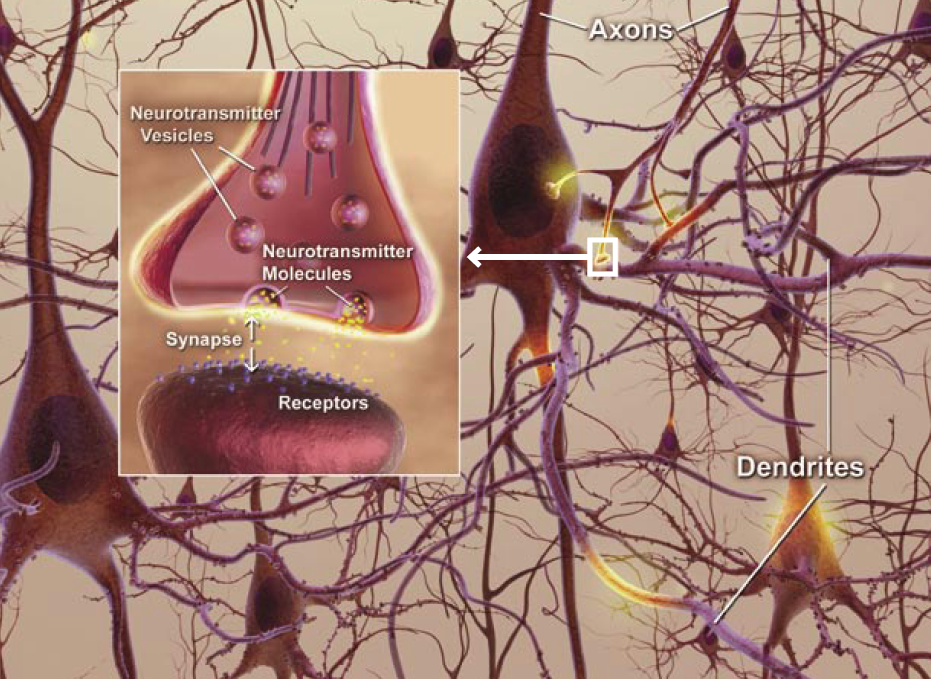
Once metabolized, the psilocin moves through the body until it finds its home and binds to serotonin receptors in the brain, most notably the 5-HT2A receptor, the same one involved in the effects of LSD, mescaline, and a plethora of other psychedelics. When a substance binds to this receptor, or similar receptors in the nervous systems of other mammals, reptiles, fish, insects, and arachnids, it produces the famous psychedelic state.
Psilocybin, the default mode network, and language
To understand the deeper picture, we have to talk about the default mode network. The default mode network is in charge of our normal waking consciousness. I picture it as a little person in your head, processing all the information arriving from different parts of the brain into a coherent structure. It acts as a gatekeeper, filtering out any noise from the universe that might interfere with survival.
It is a great tool to have, but in modern life the default mode network is completely overloaded, leading to stress, anxiety, and many of the mental health struggles that plague our time. Psilocybin, like other tryptamines and even deep meditation, has been shown through functional MRI to quiet this filter, essentially turning down this part of the brain and letting us connect to consciousness more or less unfiltered.
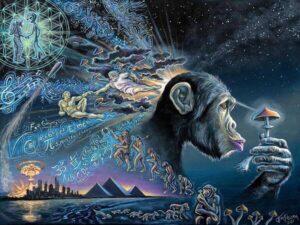
I believe that most, if not all, fungi are intelligent and sentient in their own way. They simply interact with the world through biochemistry rather than the way we do. I think psilocybin and psilocin may act as a bridge of communication between animals and the fungal realm. This is where my own twist on Terence McKenna’s Stoned Ape Theory comes in. Instead of looking at it only through epigenetic neurogenesis, I prefer to look at it through the lens of language. In these expanded states, our proto-human ancestors may have been inspired to verbally communicate their thoughts and ideas for the first time.
Language is attractive to all of us. Yes, we can be drawn to someone’s physical shape or pheromones, but true connection happens through how we communicate. I am pretty sure you feel drawn to people who are funny, who express their emotions well, who share inspiring ideas. The individuals most open to the linguistic lessons of the mushrooms may have risen up as kind and courageous leaders, had more offspring, and passed the mastery of language down their line for millions of years, until we arrive at anatomically modern humans around 300,000 years ago.
What the science is starting to show
For decades this was just a hypothesis, and honestly, without a time machine we may never know for sure. But in January 2024, the journal Brain published a study on the role of the serotonin 2A receptor in the expansion and functioning of the human transmodal cortex. It showed a connection between stimulation of the 5-HT2A receptor, the same stimulation we see with psilocin, and the rapid expansion of our brain. It is early, but it begins to ground McKenna’s far-out idea in real science.
There is more. A Yale study (Shao and colleagues, 2021) tracked tiny structures called dendritic spines in living mice using a laser scanning microscope. Spines sit on the surface of nerve cells and play a crucial role in communication between neurons. The researchers found that within 24 hours of a single dose of psilocybin, the number and size of these spines increased, and the change was still present a month later. Overall, neurons formed about 10% more connections, and stronger ones. Since chronic stress and depression are known to reduce these spines, this may help explain the lasting therapeutic effects of psilocybin.
The real magic: what psilocybin does for people
We might have co-evolved with these fungi. We might even one day use psilocybin to communicate with intelligences we cannot yet imagine. Those ideas are exciting, but none of them is as incredible as the actual change these molecules bring to people’s lives.
Hundreds of studies, and we are only getting started, have shown that well-prepared, guided sessions can have astounding results for people with treatment-resistant depression, PTSD, and eating disorders. If you want to go deeper on that, I have written more about the emerging research on sacred mushrooms and mental health, and about the gentler end of the spectrum in my ultimate guide to microdosing.
Grow your own allies
Learn to grow mushrooms from scratch
Our Online Mushroom Cultivation Course takes you all the way from spore to harvest, no lab required. Join thousands of growers around the world.
Frequently asked questions
What is psilocybin?
Psilocybin is the main psychoactive compound in magic mushrooms. Your body converts it into psilocin, which acts on serotonin receptors in the brain to produce the psychedelic experience.
What is the difference between psilocybin and psilocin?
Psilocybin is the stable storage form found in the mushroom. Psilocin is what it becomes in your body, and it is the molecule that actually crosses into the brain and is active. Psilocin oxidizes easily, which is why magic mushrooms bruise blue.
How does psilocybin affect the brain?
Psilocin binds mainly to the serotonin 5-HT2A receptor and quiets the default mode network, the brain system behind our everyday filtered sense of self. Studies also suggest it can increase the connections between neurons.
Do magic mushrooms only grow on dung?
No. Most psilocybin mushrooms grow on woodchips, grasslands, mossy forest floors, and pastures. Only a couple of species, including Psilocybe cubensis, favour dung.
Keep exploring
If you enjoyed this, dive into my take on the Stoned Ape Theory, the research on sacred mushrooms and mental illness, my guide to microdosing, a pick of five psychedelic books worth reading, and a reflection on how magic mushrooms and nature heal both us and the planet.
This article is for educational purposes and is not medical or legal advice. Psilocybin mushrooms are controlled substances in many countries. Fungi Academy does not encourage illegal activity.
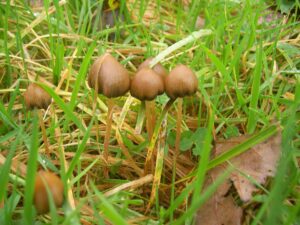
Image credits via Wikimedia Commons (Creative Commons licensed): Psilocybe semilanceata, psilocybin structure, Psilocybe cubensis, neurons and synapses.