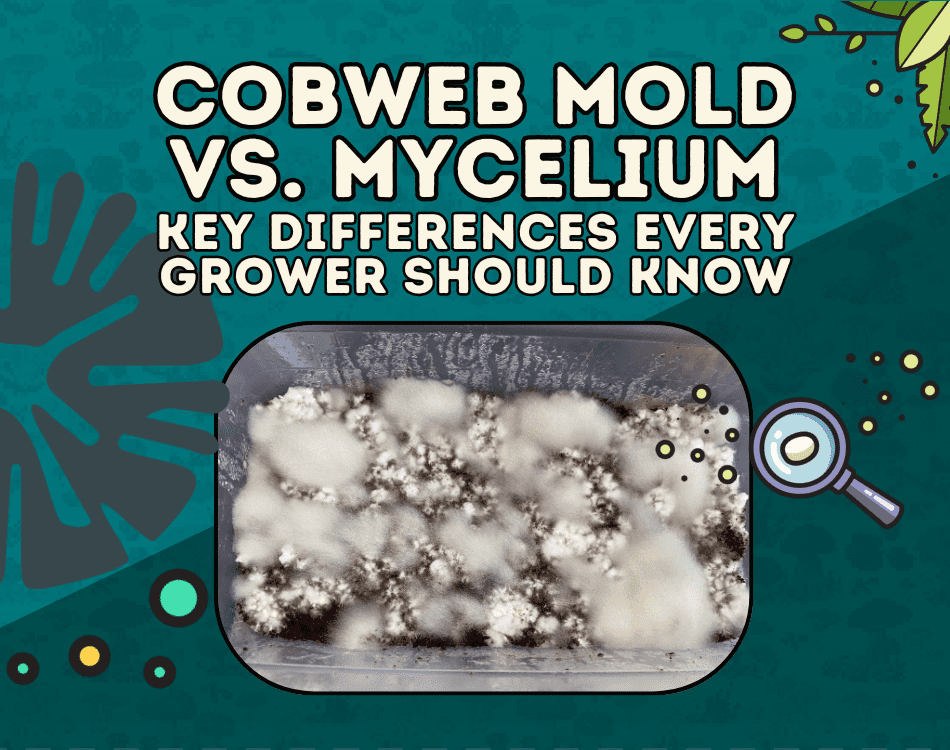
It’s (Probably) Not Cobweb Mold! Cobweb Mold vs. Mycelium
That fluffy white growth is almost certainly mycelium, not cobweb mold. Cobweb mold is light gray, wispy, smells of mildew, and grows fast — covering a tub in 24–48 hours. Healthy mycelium is bright white and stays close to the substrate. If in doubt, it’s mycelium.
What Is Cobweb Mold?
Even though it’s in every mushroom contamination guide, cobweb mold is a RARE contaminant in mushroom cultivation. It’s actually not one species of mold, but closely related mold species from the genus Dactylium or Hypomyces, that can cause pinning mushrooms to abort their growth and soft rot in more mature mushrooms. The most common places to find cobweb mold are on the casing layer of your substrate and in mushroom monotubs, especially in later flushes. Another defining characteristic of cobweb mold is that it grows extremely fast. If you’re thinking to yourself, “Hmm, could that be cobweb mold?” and 24-48 hours later the growth in question has overtaken your monotub, chances are good you do in fact have cobweb mold! You might be wondering, is cobweb mold dangerous? Cobweb mold does not create toxins that affect humans, but it’s best not to consume contaminated mushrooms. Be careful when handling cobweb mold (e.g. wear a mask); some people have allergic reactions to mold spores or may develop respiratory issues due to breathing in spores. If this all feels a little overwhelming — don’t worry, you’re not alone. Learning to spot the difference between healthy mycelium and contaminants like cobweb mold takes time and experience. That’s why we created our mushroom cultivation courses. Whether you want hands-on guidance in the mountains of Guatemala or prefer to learn at your own pace from home, we’ve got you covered. Check out our in-person cultivation course or dive into our online mushroom cultivation course to build your skills and confidence.What Does Cobweb Mold Look Like?
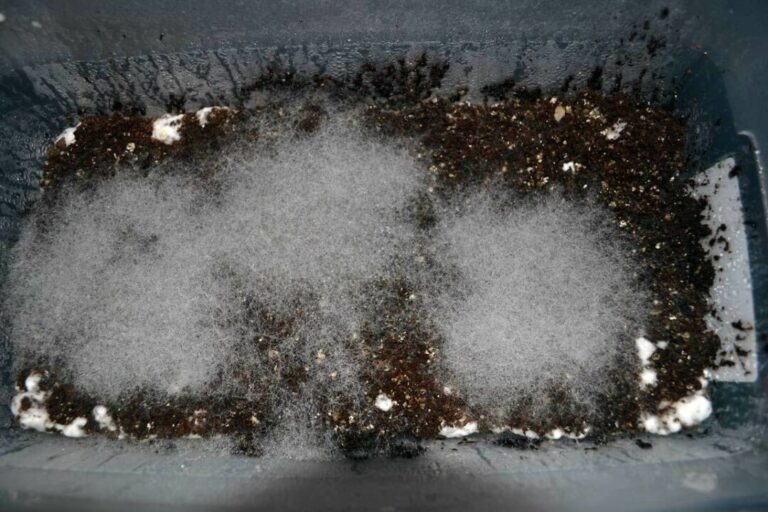
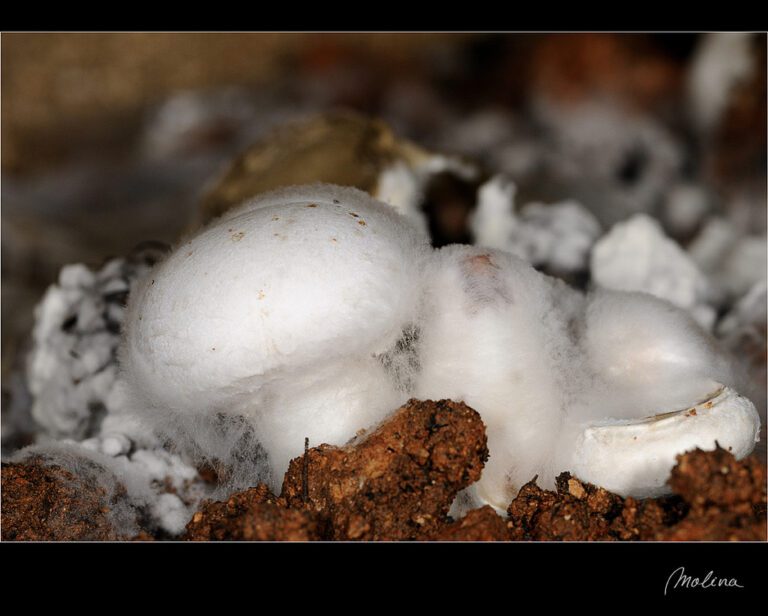
Especially if you’re just starting to grow mushrooms, you may not know that there are different types of mycelial growth. Healthy mycelium can look web-like, rope-like, and fluffy under certain conditions. So how do you tell cobweb mold vs. mycelium? Unlike mycelium, which is bright white, cobweb mold is usually a light gray color, especially as it ages, with a wispy texture. It’s made up of very fine strands and smells of mildew. Cobweb mold protrudes at least 0.5-1″ (1.3-3 cm) above the surface of the mycelium in a cloud-like structure. Despite the name, cobweb mold looks like cotton balls, NOT a spiderweb! See below a few photo examples of cobweb mold contaminated mycelium:

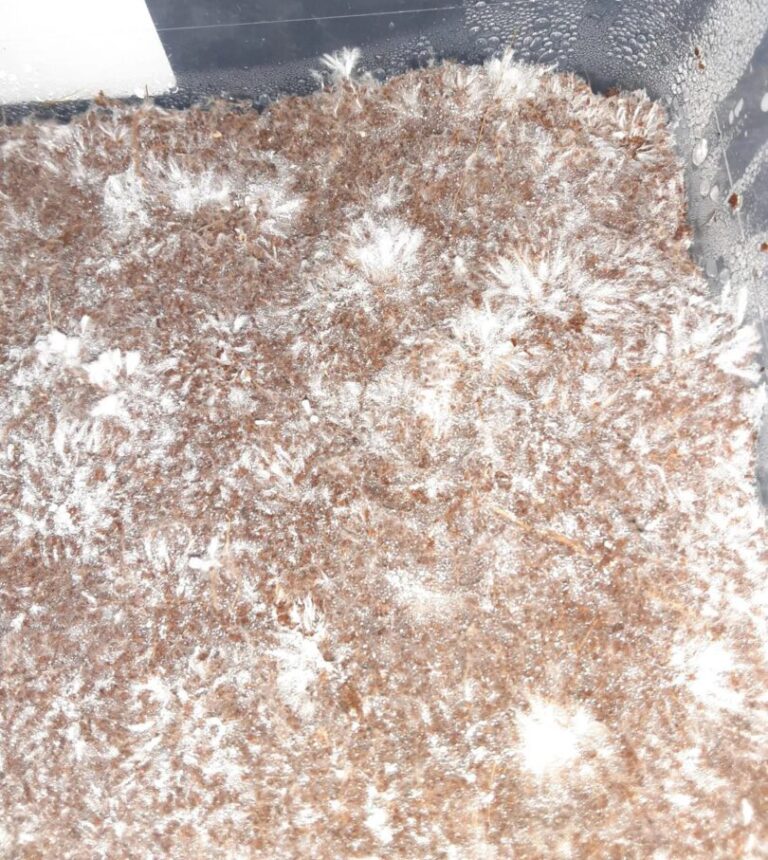
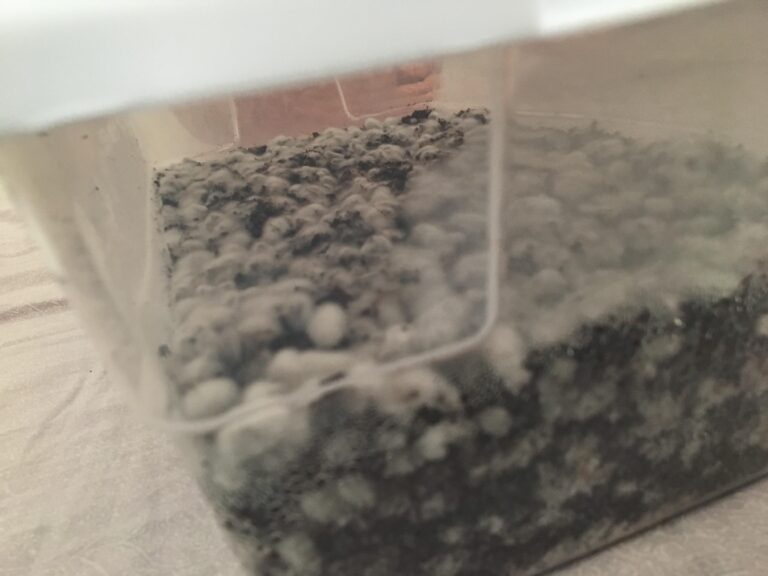
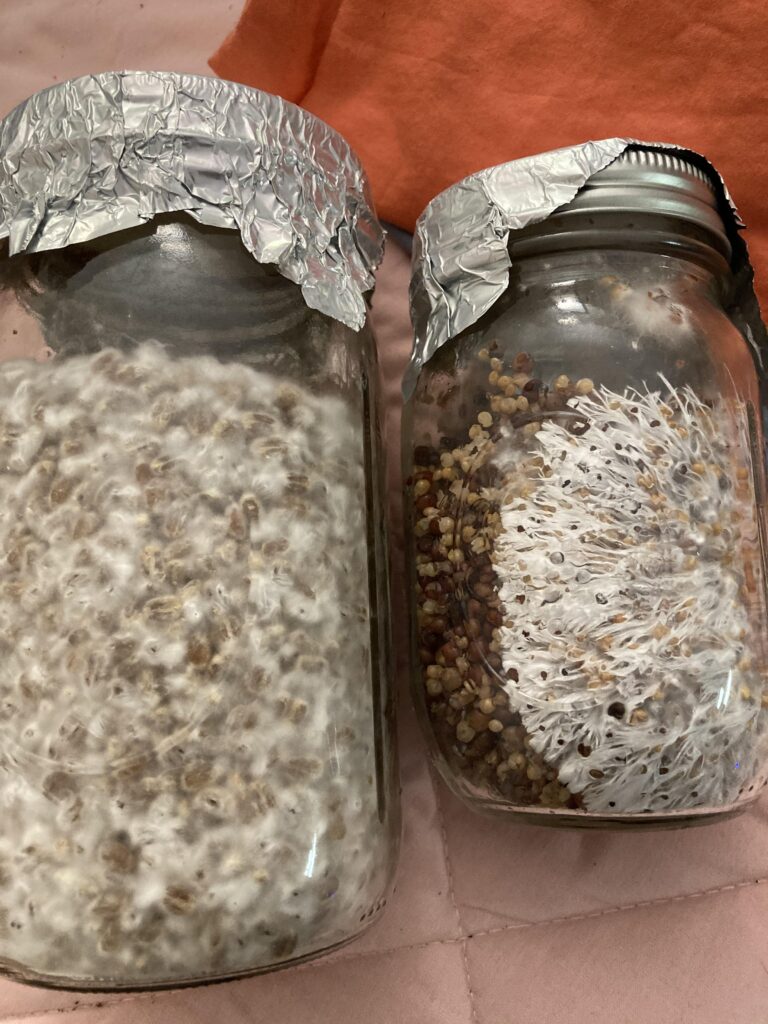
Still can’t tell cobweb from mycelium? Get a second pair of eyes on it tonight.
It’s probably fine. But “probably” is a horrible thing to sit with for three days. Post a photo in the Mushroom Membership and a grower who has been where you are tells you what it is and what to do next.
Rather prevent it for good? The Online Cultivation Course covers sterile technique from day one.

What To Do If You Have Cobweb Mold
In the rare case that you actually do have cobweb mold, you may be able to salvage your grow, especially if caught early before it sporulates. Spray the infected areas with a 3% solution of hydrogen peroxide (H202), as this will kill mold and its spores but won’t damage the mycelium. The mold will appear to melt once it comes in contact with the H202 spray. After spraying the moldy area, you can spray and soak a paper towel with 3% H202 and cover the contaminated spot. Leave overnight. This should prevent you from having to spray again. Though H202 spray is not known to harm mycelium, it is a weakly acidic solution, which means that if you’re spraying your substrate over and over with it, it will turn those areas more acidic. Some other contaminants in mushroom cultivation, such as Trichoderma, prefer acidic environments — so even if you’re killing the cobweb mold, you could be creating the perfect setting for another contaminant to thrive. That’s why prevention is best. To prevent cobweb mold, keep in mind that it prefers high humidity and stagnant air. Make sure to properly hydrate your substrate (you don’t want it too wet!), keep humidity in a lower range (around 80%), and provide plenty of air circulation. If you wanna get fancy with an automated monotub where you can better control humidity and fresh air exchange (FAE), you can’t go wrong with the North Spore automated monotub kit. Get 10% off storewide at North Spore with code “FUNGIACADEMY”!To learn more about mushroom contamination and how to prevent it, check out our YouTube video on “How to Spot Contamination in your Agar, Grains and Liquid Culture”https://youtu.be/rrX-dC8A9Ko?si=jZVqDCo7KQaDG9IP
Frequently asked questions
Cobweb mold does not produce toxins that affect humans. Even so, do not eat mushrooms from a contaminated grow, and wear a mask when you handle it. Some people react to mold spores or get respiratory irritation from breathing them in.
It is light gray, wispy, and built from very fine strands, and it smells of mildew. It sits above the surface like a cloud of cotton balls, roughly half an inch to an inch tall. Healthy mycelium, by contrast, is bright white and stays close to the substrate.
Speed is the giveaway. Cobweb mold grows fast and can overtake a tub in 24 to 48 hours, while mycelium spreads slowly and hugs the substrate. If the growth is bright white and not exploding overnight, it is almost certainly mycelium. When in doubt, it is mycelium.
Spray the affected area with a 3% hydrogen peroxide solution. It melts the mold on contact without harming the mycelium. You can then cover the spot with a paper towel soaked in 3% hydrogen peroxide and leave it overnight so you do not have to respray.
Cobweb mold thrives in high humidity with stagnant air. To prevent it, hydrate your substrate properly so it is not waterlogged, keep humidity in a lower range around 80%, and give the grow plenty of fresh air circulation.
Keep Learning & Growing
Now that you know the difference, here are the best next steps to level up your cultivation game:- Mushroom Contamination: How to Spot and What to Do — our full guide to trichoderma, bacteria, and cobweb mold with photos.
- How to Make a Still Air Box — the single best thing you can do to prevent contamination entering your grow. Build one in 10 minutes for under $20.
- Best Still Air Boxes for Mycologists — prefer to buy rather than build? We reviewed the top options.
- 5 Common Mushroom Cultivation Mistakes — most contamination problems start earlier in the process than you think.