
Quick answer: Lion’s Mane (Hericium erinaceus) is a shaggy, white gourmet and medicinal mushroom with science-backed anti-inflammatory, antioxidant, antimicrobial, and nerve-regenerating (NGF-stimulating) benefits. Forage it on dead or dying hardwoods in late summer through fall, identify it by its hanging spines and seafood-like aroma, and grow it at home on hardwood substrate in cool, humid, well-aerated conditions.
Lion’s mane: everything you need to know
Lion’s Mane (Hericium erinaceus) has gained popularity in recent years, with the rise of medicinal and gourmet mushrooms sweeping the world.
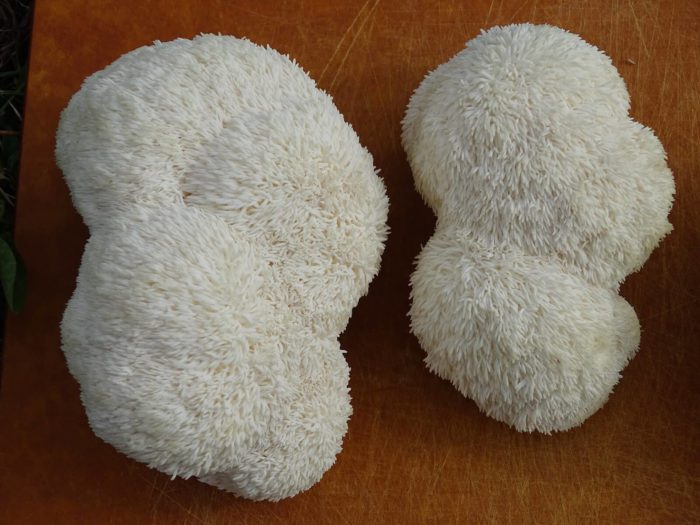
You may recognize it from one of your medicinal mushie blends, or perhaps you’ve seen it at the local farmer’s market or health foods store. With its shaggy, sea anemone-like appearance and white creamy color, lion’s mane doesn’t look like your typical stem & cap mushroom fruiting body. Some also say it resembles a brain, which gives a good hint to some of its potential health benefits.
Lion’s Mane History
Lion’s Mane has a long and storied history in Asian culture and Traditional Chinese Medicine (TCM), with records dating back as far as 618 AD during the Tang Dynasty. In TCM, it has been valued for supporting digestive health and treating gastrointestinal conditions such as ulcers and chronic gastritis. The mushroom is said to nourish the stomach and spleen, promoting the smooth flow of Qi, the body’s vital life force.
Beyond Asia, evidence suggests that Native American tribes, particularly in the Pacific Northwest, utilized Lion’s Mane as a topical styptic or poultice to stop bleeding and alleviate pain, demonstrating its diverse and cross-cultural history of healing applications.

Lion’s Mane Health Benefits
Turns out the hype around Lion’s Mane is real, and for good reason. Lion’s mane is rich in bioactive compounds, making it a potent healer, protector and restorer. After reviewing several peer-reviewed studies, here are some of the most prominent health benefits of lion’s mane mushroom, backed by science.
Some of the most prominent health benefits of Lion’s Mane mushroom include:
Anti-Inflammatory
Its polysaccharides, terpenoids, peptides, and other constituents modulate inflammatory signaling (e.g. suppressing NF-κB pathways) to help calm chronic inflammation.
Antioxidant
These same chemical compounds as well as ergothioneine help scavenge free radicals and induce endogenous antioxidant enzymes, protecting neurons and other tissues from oxidative stress.
Neurodegenerative / Neurotrophic
Lion’s mane has been proven to stimulate nerve growth factor (NGF) synthesis with compounds from both the fruiting body AND mycelium. By enhancing NGF expressions and supporting myelination, lion’s mane strengthens the myelin sheath around nerves and neurons, giving it lots of potential in the prevention of neurodegenerative diseases such as Alzheimer’s and Parkinson’s. Because NGF and neuroplasticity play key roles in emotional and psychological recovery, lion’s mane is also being explored for its potential to support healing from PTSD and emotional trauma.
Antimicrobial
Studies show that lion’s mane extracts display inhibitory activity against bacterial and fungal pathogens, making it a helpful ally for immune support and recovering from infection.

Free Beginner’s Guide
Grow your first mushrooms — for free
Get the free guide that walks new growers through the whole path — plus 5 free videos to send you on your way.
- The exact gear you need — and the pricey stuff you don’t
- Where to source spores & cultures without getting scammed
- How to spot and beat contamination before it wipes out your grow
Foraging Lion’s Mane
Where to Look for Wild Lion’s Mane
When foraging Hericium erinaceus, you’re looking UP: particularly on old, wounded hardwoods (oak, beech, maple, walnut) that bear scars, cavities, or decayed limbs. Lion’s Mane grows on dead or dying hardwood trees and is commonly found in deciduous forests throughout North America, Europe and Asia.
When to Forage for Lion’s Mane
Late summer through fall (August–November) after a good rainfall. We suggest looking for them when daytime temps are cool (50–70°F / 10–21°C).
ID Checklist (What to look for…)
- Large white pom-pom or icicle-like shape (no cap or stem)
- Hanging spines/teeth at least 1 cm long that turn yellowish with age
- Soft, spongy texture when fresh
- Grows directly from wood, not from the ground
- Distinct seafood-like aroma when fresh (similar to crab or lobster)
Lion’s Mane Mushroom Harvesting Tips
- Cut the base with a knife rather than pulling
- Avoid overripe specimens that can turn brown or watery
- Store in a paper bag or breathable basket to prevent sogginess
- Avoid soaking in water; instead, clean gently with a soft brush
Lion’s Mane Lookalikes to Watch Out For
While Lion’s Mane is fairly distinctive, a few related Hericium species can resemble it:
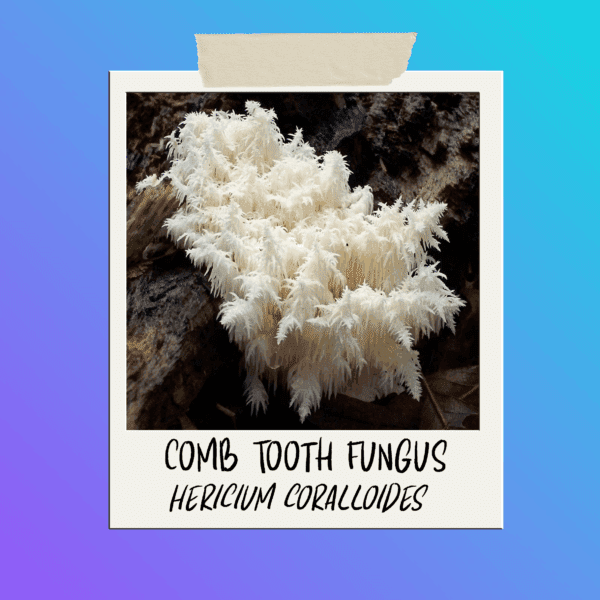
Comb Tooth Fungus — Hericium coralloides
Has many branched arms and clusters of smaller spines rather than a single pom-pom. Also edible and delicious.
Bear’s Head Tooth — Hericium americanum
Looks like a cross between Lion’s Mane and Comb Tooth but branched with longer dangling spines. Also edible!
Western Spiny Hedgehog — Hericium abietis
Found mostly on conifer wood, not hardwood. Edible but less flavorful; confirm your substrate to distinguish it.
Growing Lion’s Mane
Lion’s Mane mushrooms are surprisingly simple to grow once you understand their unique needs. Unlike other mushrooms that grow from soil, Lion’s Mane thrives on hardwood substrates, such as oak, beech, or maple. Lion’s Mane loves cool, moist, and well-aerated conditions. We cover the full process step-by-step in our Online Mushroom Cultivation Course, where you’ll gain hands-on guidance from experienced cultivators. For a deeper look at the full workflow, check out our detailed guide: How to Grow Lion’s Mane Mushrooms.
Keep Learning & Growing
Lion’s Mane is one of the most fascinating mushrooms in the world — here’s where to go next:
- How to Grow Lion’s Mane Mushrooms — step-by-step cultivation guide from our experienced growers.
- Reishi Mushroom: Everything You Need to Know — another powerhouse medicinal species worth adding to your practice.
- 6 Things to Know Before Buying a Mushroom Supplement — if you’re buying Lion’s Mane extract, read this first.
- How to Make a Mushroom Tincture — the double-extraction method for turning dried Lion’s Mane into a concentrated tincture.
- Microdosing: The Ultimate Guide — Lion’s Mane is a key ingredient in the Stamets Stack microdosing protocol.
- How to Make Mushroom Chocolate Bars — one of the most popular ways to use dried Lion’s Mane powder.
Frequently Asked Questions
What are the health benefits of lion’s mane mushroom?
Lion’s mane mushroom (Hericium erinaceus) has several science-backed health benefits: it is anti-inflammatory, antioxidant, antimicrobial, and neurotrophic. Most notably, it stimulates nerve growth factor (NGF) synthesis, which supports brain health, may help prevent neurodegenerative diseases like Alzheimer’s and Parkinson’s, and can aid recovery from nerve injury.
Can you grow lion’s mane mushroom at home?
Yes — lion’s mane is one of the easier gourmet mushrooms to grow at home. It thrives on hardwood substrates such as oak, beech, or maple, and needs cool (60–75°F), humid conditions with good airflow. Fungi Academy’s online mushroom cultivation course covers the full process step-by-step, from choosing genetics to harvesting.
When and where do you find lion’s mane mushroom in the wild?
Lion’s mane grows on dead or dying hardwood trees (oak, beech, maple, birch) in deciduous forests throughout North America, Europe, and Asia. The best foraging season is late summer through fall (August–November), especially after rainfall, when daytime temperatures are between 50–70°F (10–21°C).
What does lion’s mane mushroom taste like?
Lion’s mane has a mild, seafood-like flavor often compared to crab or lobster. It has a soft, spongy texture when fresh and becomes meaty when cooked. It absorbs flavors well, making it a popular meat substitute in plant-based cooking.
Does lion’s mane mushroom have any lookalikes?
Lion’s mane has a few close relatives in the Hericium genus: Hericium coralloides (Comb Tooth Fungus), Hericium americanum (Bear’s Head Tooth), and Hericium abietis (Western Spiny Hedgehog). All are edible and non-toxic. True lion’s mane always has visible spines or teeth — never a fuzzy or cottony surface. When in doubt, don’t eat it.
How does lion’s mane mushroom support brain health?
Lion’s mane stimulates the production of nerve growth factor (NGF), a protein essential for the growth and maintenance of neurons. This supports myelination (the protective sheath around nerves), enhances neuroplasticity, and may help prevent or slow neurodegenerative diseases like Alzheimer’s and Parkinson’s. It is also being researched for its potential to support recovery from PTSD and emotional trauma.
Ready to grow your own Lion’s Mane at home? Our Online Mushroom Cultivation Course covers Lion’s Mane and 10+ other species — with 70+ video lessons, a 130-page workbook, and lifetime access. Or join the Mushroom Membership for monthly live masterclasses, expert Q&As, and a global community of mushroom lovers.